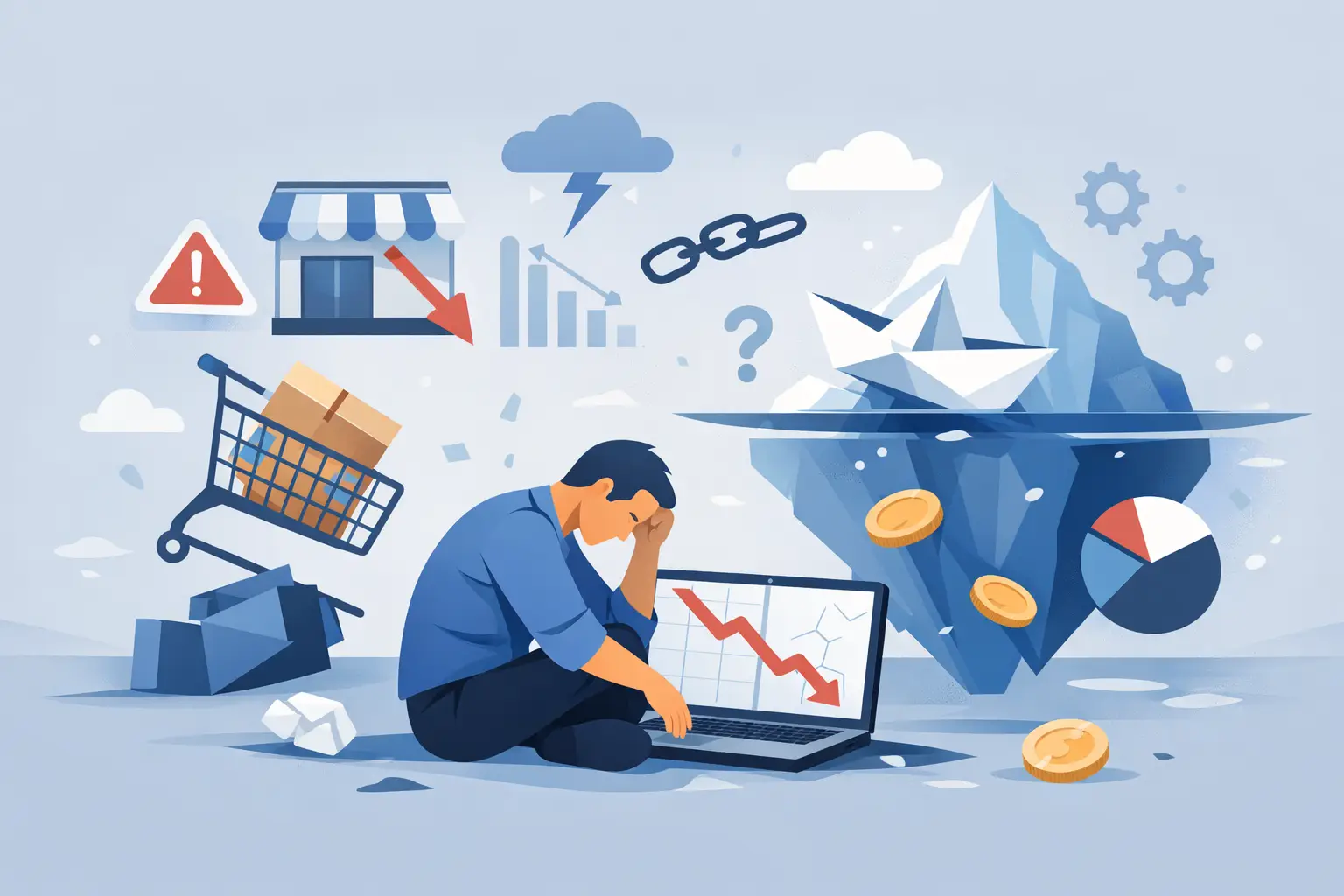
A new online business can look active long before it is actually working. There may be a website, social profiles, a logo, and a few posts. But if no clear offer is reaching the right people, none of that creates income. That is the hard answer to why do online businesses fail: most do not fail from a lack of effort. They fail because effort is spent on the wrong things for too long.
For people building around a job, family, or other real-life responsibilities, that mistake is expensive. You do not need more noise, more tools, or another week of watching competitors. You need a simple business model, a focused plan, and the willingness to do the work that moves a customer from interest to action.
Why Do Online Businesses Fail Before They Gain Momentum?
The early stage is where many aspiring entrepreneurs get stuck. They expect a business to feel certain before they act. It rarely does. Progress usually comes after you test an offer, hear objections, adjust your message, and repeat.
The goal is not to build a perfect online presence. The goal is to build a business that solves a real problem and can consistently attract customers.
1. They Start Without a Clear Customer or Problem
Trying to help everyone sounds generous, but it makes marketing vague. “Helping people live better” is not an offer. “Helping busy professionals create a simple digital income stream without learning complicated technology” is much clearer.
A clear customer helps you choose the language, content, product, and sales process. You do not need to narrow yourself into a tiny corner forever. You do need enough focus to make someone feel that you understand their situation.
Before building anything major, answer three questions: Who is this for? What frustrating problem do they want solved? Why is your solution easier, faster, safer, or more useful than doing nothing? If those answers are fuzzy, your marketing will be fuzzy too.
2. They Build a Website Instead of Building an Offer
A polished website can be useful. It can also become a hiding place. Many people spend months changing colors, rewriting an About page, and comparing software while avoiding the uncomfortable work of making an offer.
Your offer is the center of the business. It should explain what the customer receives, the outcome it helps create, what it costs, and what happens next. Start simple. A basic landing page, a clear message, and one call to action can outperform a beautiful site with no direction.
This does not mean presentation never matters. It means the order matters. Get the offer and audience right first. Improve the design once real people are responding.
3. They Choose a Model That Does Not Fit Their Life
Not every online business is a good match for every entrepreneur. A model that requires constant live calls may not work for a parent with unpredictable evenings. A business dependent on daily short-form content may not suit someone who prefers direct conversations, email, or teaching.
Choose a path you can operate consistently. Consider the hours you have, your current skills, your budget, and how quickly you need income. There are trade-offs. Faster revenue may require more direct outreach. More automated income usually takes more setup, testing, and patience.
The right model is not the one that looks easiest on social media. It is the one you can follow through on long enough to become competent.
The Execution Mistakes That Quietly Drain a Business
Once an offer exists, execution becomes the difference between a project and a business. This is where consistency matters more than motivation.
4. They Rely on Random Marketing
Posting whenever inspiration strikes is not a marketing system. Neither is joining every platform because someone said it is where the money is.
Pick one or two ways to reach your audience and learn them well. That might mean creating helpful content, starting conversations, building an email list, running paid ads, attending relevant online communities, or using partnerships. The best channel depends on where your audience pays attention and what you can do consistently.
Every activity should lead somewhere. A useful post can lead to a free resource. The resource can lead to an email follow-up. The follow-up can lead to a clear offer. Without that path, attention disappears as quickly as it arrives.
5. They Avoid Selling
Many people are comfortable learning, planning, and posting. They freeze when it is time to invite someone to buy. They worry about sounding pushy, so they make their message so soft that no one knows what they are offering.
Selling is not pressure when the offer is relevant and honest. It is explaining a problem, showing a practical path forward, and asking whether the person wants help. Some people will say no. That is normal. A no is information, not a verdict on your ability.
Use simple language. State the benefit. Explain the process. Be clear about the price or next step. Then let adults make their own decision.
6. They Do Not Track What Is Working
Feelings are not business metrics. You may feel busy all week and still have no idea which activity produced leads, conversations, or sales.
Track the basics from day one: how many people see your offer, how many respond, how many join your email list, how many book a call or purchase, and how much it costs to get a customer if you are paying for traffic. You do not need a complicated dashboard. A simple spreadsheet can reveal where the real problem is.
If people see the offer but do not respond, your message may be weak. If they respond but do not buy, the offer, price, or sales process may need work. Numbers remove guesswork.
7. They Quit Before the Data Is Useful
Online business is full of exaggerated promises. That creates an unrealistic expectation that a few posts or a new ad should produce instant results. When that does not happen, people jump to a new niche, a new platform, or a new course.
Changing direction too fast prevents learning. Give a focused strategy enough time and enough volume to generate useful feedback. That does not mean blindly repeating a failed approach for a year. It means making informed adjustments instead of emotional pivots.
Set a test period. For example, commit to a defined number of outreach conversations, emails, or content pieces. Review the results, improve one variable, and test again. That is how momentum is built.
The Support Gap Most New Entrepreneurs Underestimate
8. They Try to Figure Out Everything Alone
The internet gives you access to unlimited information. It does not give you a sequence. That is why talented, motivated people can stay stuck for months. They consume advice that conflicts, collect tools they never use, and wonder why they still lack a working plan.
Guidance shortens the learning curve because it helps you identify the next important move. Community matters too. Building alone makes every setback feel personal. Building around people who are taking action helps you keep perspective and stay accountable.
A structured program or mentor is not a substitute for effort. It is a way to direct effort where it can produce a result. The value is not just information. It is clarity, feedback, and fewer costly detours.
9. They Treat the Business Like a Hobby
A flexible online business can fit around your life. It still needs protected time. If the business only gets attention after every other demand is handled, it will always be pushed to the bottom of the list.
You do not need to work twelve-hour days. You do need a realistic operating rhythm. Schedule specific blocks for lead generation, customer follow-up, delivery, and learning. Protect those blocks as you would an appointment with your employer or a client.
Small, repeated actions beat occasional bursts of energy. Thirty focused minutes of outreach five days a week can create more opportunity than one frantic weekend spent redesigning a homepage.
Build for Progress, Not Applause
The businesses that last are not always started by the most technical people or the loudest personalities. They are started by people willing to stay focused on a real customer, use a proven process, measure what happens, and improve without disappearing when results are slow.
If you have been telling yourself that you are too late, too busy, or not technical enough, challenge that story. Start with a clear next step, not a giant leap. Build the skill of taking consistent action, get support when you need it, and let real market feedback guide the next move.
Watch the free webinar at apexdigitalnow.com and see exactly how the model works — no hype, no pressure, just the truth about what is possible for you.
—
As with any business, results will vary and cannot be guaranteed.*
Leave a Reply