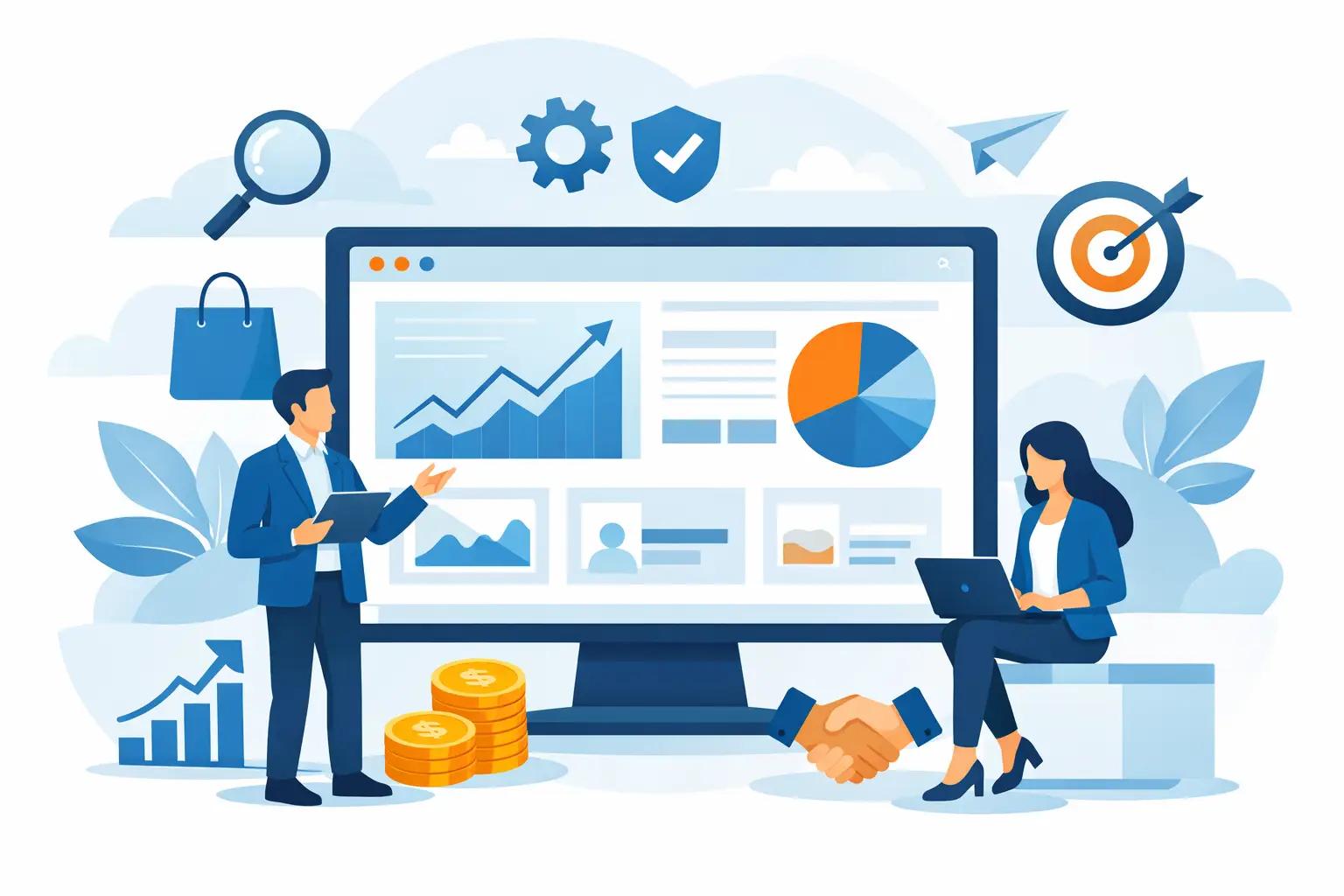
Someone hears about your business, gets interested, and searches for you. If all they find is a social profile with a few posts and an old logo, you’re making them work too hard. That’s the real issue behind the 9 benefits of having a business website – it gives people one clear place to understand what you do, why it matters, and what to do next.
For a lot of new entrepreneurs, especially those starting later in life or building something on the side, a website can feel like a “next step” you’ll get to eventually. But eventually has a cost. Every day without a website is a day you’re harder to trust, harder to find, and harder to buy from.
Why the 9 benefits of having a business website matter
A business website is not just a digital business card. It’s your home base. Social media platforms change. Algorithms shift. Accounts get limited. Trends come and go. Your website is the one place online that belongs to you.
That matters more than people realize.
If you want a business that can grow without depending on luck, referrals alone, or your constant one-on-one effort, you need a foundation. A website helps create that foundation. It gives structure to your message, your offer, and your customer journey.
1. It makes your business look real
People judge credibility fast. That may not feel fair, but it’s true.
When someone lands on a professional website, they immediately get a stronger sense that your business is legitimate. They can see what you offer, who it’s for, and how to reach you. Even a simple site does this better than a social page alone because it shows intention. It signals that you’ve invested in your business instead of treating it like a casual side hobby.
This is especially important if you’re new and don’t have years of brand recognition behind you. A website helps close the trust gap.
2. You control the message
On social media, your message is squeezed into captions, graphics, short videos, and whatever format a platform currently favors. That can work for attention, but it’s not ideal for clarity.
A website lets you explain your business properly. You can speak directly to the problems your audience has, show your solution, answer common questions, and guide visitors toward a decision. You’re not fighting a feed. You’re leading a conversation.
That control matters when your audience needs more than hype. Many people between 35 and 65 want straightforward information before they trust a business. They want to know what they’re getting into. Your website gives them that.
3. It helps people find you through search
One of the biggest benefits of having a business website is visibility.
When your website is built with clear pages and useful content, search engines can index it and show it to people looking for what you offer. That means your business has a chance to show up even when you’re not actively posting, messaging, or networking.
This doesn’t mean traffic appears overnight. Search takes time. But unlike a social post that disappears in a day, a strong website page can keep working for months or longer. That makes your effort compound.
If you’re building a business while managing a job, family, or other responsibilities, you need assets that keep doing their job when you step away. A website does that.
4. It gives customers a clear next step
Confused people don’t buy.
A website lets you direct visitors toward one action at a time. That might be booking a call, filling out a form, joining your email list, requesting a quote, or making a purchase. Without a website, many businesses rely on back-and-forth messages that create friction and slow everything down.
A good site removes that friction. It answers enough questions to move the right people forward and filters out the ones who aren’t a fit. That saves time and improves lead quality.
This is one reason websites are so valuable for service providers, coaches, consultants, and digital business owners. The website becomes part of the sales process instead of just a placeholder.
5. It works even when you’re off the clock
You cannot answer questions 24/7. Your website can.
That doesn’t mean it replaces human connection. It means it supports it. While you’re working, sleeping, driving, or spending time with family, your site can explain your offer, collect inquiries, share testimonials, and move people closer to a decision.
For anyone trying to build more freedom into their life, this matters. A website is one of the simplest ways to stop making your business depend on your constant presence.
It won’t run your entire business by itself, and anyone telling you that is selling a fantasy. But it can absolutely reduce manual effort and make growth more realistic.
6. It helps you collect leads instead of losing them
Attention is hard to earn. Once you have it, you need a way to keep it.
A website gives you a place to collect names, emails, and inquiries from people who are interested but not ready yet. That is a major advantage because most visitors will not buy on the first interaction. They may need time, proof, or a few more touchpoints.
If you only rely on social media, a lot of that interest disappears. People mean to come back, then life happens. A website helps you capture that opportunity before it slips away.
This is where simple systems make a big difference. A clear landing page, a contact form, or a basic email signup can turn casual interest into a real business asset.
7. It strengthens your marketing everywhere else
Your website makes every other marketing effort work better.
Running social media? Your website gives followers somewhere meaningful to go. Meeting people through referrals? Your website helps them verify you quickly. Sending emails? Your website backs up your claims. Running ads? Your website gives that traffic a focused destination.
Without a website, your marketing often loses momentum because there’s no strong central point. Everything stays scattered. When your message is spread across platforms with no real home, it becomes harder for people to understand your business and easier for them to move on.
A website brings your efforts together.
8. It helps you compete with bigger businesses
You do not need a huge team to look professional online. You need clarity.
A well-structured website can help a small business compete far above its size. If your message is sharp, your offer is clear, and your site is easy to use, people care a lot less about whether you have a giant company behind you.
In many cases, smaller businesses actually have an advantage. They can speak more directly, serve more personally, and respond faster. A website gives you a platform to show that.
Of course, design matters to a point. A sloppy, outdated site can hurt trust. But you do not need something fancy to win. You need something clean, clear, and built around what your audience needs to see.
9. It supports long-term growth
A business website is not just about getting your first few customers. It’s about building something that can expand.
As your business grows, your website can grow with it. You can add services, sales pages, blog content, testimonials, FAQs, lead magnets, booking tools, and more. You can test what messaging works. You can track visitor behavior. You can improve conversions over time.
That kind of flexibility matters if you’re serious about building a business instead of just chasing short bursts of income.
This is one reason so many people feel stuck when they try to grow only through social platforms. They are building on rented space. A website gives you room to build an actual system.
What stops people from getting a website
Usually, it comes down to three things: fear, confusion, and overcomplication.
Some people think they need advanced tech skills. They don’t. Others assume a website has to be expensive before it can be effective. Also not true. And plenty of aspiring business owners get trapped trying to make everything perfect before they launch anything at all.
That mindset keeps a lot of good people invisible.
Your first website does not need every page, every feature, or every polished detail. It needs to be live, clear, and useful. You can improve it as you go. In fact, that’s the smarter move. Real growth usually comes from action, feedback, and refinement – not from waiting until everything feels ready.
If you’re building an online business and want guidance instead of guesswork, platforms like Apex Digital Now are built around that exact problem. The goal is not to impress yourself with complexity. The goal is to create something that works.
A website is not optional if you want leverage
There are always exceptions. Some businesses get by on referrals alone. Some people generate early sales through social media only. But if you want more control, more credibility, and more staying power, a website stops being optional pretty quickly.
It gives your business a home. It helps people trust you faster. It creates leverage in a way that constant posting and manual outreach never fully can.
You do not need to build the perfect website. You need to stop giving people a reason to doubt that your business is real, ready, and worth their attention.
Watch the free webinar at apexdigitalnow.com and see exactly how the model works — no hype, no pressure, just the truth about what is possible for you.
—
As with any business, results will vary and cannot be guaranteed.*
Leave a Reply