Blog

  • How to Choose a Digital Niche That Sells

    How to Choose a Digital Niche That Sells

    Most people do not get stuck because they lack motivation. They get stuck because they pick a niche the same way they pick a Netflix show – too many options, not enough clarity, and way too much second-guessing.

    If you are trying to figure out how to choose a digital niche, start here: stop looking for the perfect idea. You are not picking a lifelong identity. You are choosing a market to serve, a problem to solve, and a business model you can actually stick with long enough to see results.

    That shift matters. A niche is not just a topic you like. It is where your interest, real demand, and profit potential meet. If one of those is missing, the business gets harder fast.

    What a digital niche really is

    A digital niche is a specific segment of people with a clear problem, desire, or goal that can be served online. That could mean content, coaching, consulting, affiliate marketing, digital products, or a service-based offer. The key is specificity.

    “Health” is too broad. “Meal planning for women over 40 with busy schedules” is getting closer. “Budgeting” is broad. “Debt payoff for single parents with variable income” is a niche.

    The more specific you get, the easier it becomes to create useful content, speak to the right people, and build trust. Broad markets look attractive because they seem bigger. In practice, they are usually harder to break into because your message gets lost.

    How to choose a digital niche without overthinking it

    A good niche usually sits at the intersection of three things: what you know, what people want, and what people will pay to solve. Miss one, and you create friction.

    If you choose something you know well but nobody cares about, you end up talking to yourself. If you choose a hot market you know nothing about and do not care about, you will burn out. If you choose something people want but never spend money on, you may get attention without income.

    That is why the smartest move is not chasing trends. It is finding a niche where you can be useful now, not someday after ten more certifications and six more months of research.

    Start with your lived experience

    You do not need to be the world expert. You do need to be credible, honest, and a few steps ahead of the people you want to help.

    For many new entrepreneurs, the best niche clues come from real life. Look at the problems you have solved, the skills people already ask you about, and the situations you understand firsthand. Maybe you have managed a household budget through inflation, rebuilt your career after burnout, learned simple tech tools as a complete beginner, or improved your health with a realistic routine instead of an extreme one.

    Those experiences matter because they give you perspective. People trust someone who speaks clearly about a real problem more than someone who sounds polished but disconnected.

    That said, personal experience alone is not enough. You still need proof that the market exists.

    Check demand before you commit

    This is where people either get practical or waste months.

    Before you build content, branding, or offers, look for signs that people are already searching for help. Are there active conversations around the problem? Are creators, coaches, or businesses already serving that space? Are people buying courses, memberships, services, or tools tied to that problem?

    Competition is not bad news. It is often validation. If nobody is talking about the niche, there may be no market. If there are already people making money there, that tells you demand exists. Your job is not to invent a market from scratch. Your job is to position yourself clearly within one.

    The better question is not, “Is this niche crowded?” It is, “Can I speak to a specific group in a way that feels more relevant, honest, or simple?”

    Look for pain, urgency, and results

    Some niches are easier to monetize because the problems are expensive, emotional, or urgent.

    People will spend money to make more money, save time, improve health, reduce stress, solve relationship problems, build confidence, or avoid costly mistakes. They are less likely to spend consistently on vague interests with no clear result.

    This does not mean every niche has to be dramatic. It means the outcome should matter. If your niche helps someone move from confusion to clarity, wasted time to efficiency, or fear to confidence, that has value.

    A simple test helps here. Finish this sentence: “My niche helps this type of person get this result.” If you cannot answer that clearly, the niche is still too broad or too weak.

    Make sure it fits your season of life

    This part gets ignored too often.

    A niche can be profitable and still be wrong for you right now. If you are juggling a job, family, and other responsibilities, do not choose a niche that demands constant research, nonstop content, or a personality style that drains you.

    Pick something you can sustain. If you prefer teaching over trend-chasing, choose a niche that rewards depth. If you like structure and systems, choose a niche where practical guidance matters. If you want flexibility, avoid business models that require you to be online all day.

    This is one reason people between 35 and 65 often do better when they lean into what they already know instead of trying to become a completely different person online. You do not need to act younger, louder, or more extreme to build a digital business. You need a niche that fits your strengths and your real schedule.

    Narrow your niche without boxing yourself in

    A lot of beginners resist narrowing down because they think they will lose opportunities. Usually the opposite happens.

    When your message is too broad, people do not know you are for them. When your niche is clear, the right people pay attention faster. You can always expand later, but trying to serve everyone from the start makes growth slower.

    A strong niche often includes three parts: who you help, what problem you solve, and what kind of outcome you help them reach. For example, instead of “I help with online business,” you might focus on beginners over 40 who want to build a simple digital income stream without complicated tech.

    That is specific enough to attract the right audience without trapping you forever.

    Test before you build everything

    You do not need a full brand, funnel, and content calendar to validate a niche. You need feedback.

    Start by creating a few pieces of content, messages, or offers around the niche and watch the response. Which topics get attention? What questions keep coming up? Where do people lean in? Where do they scroll past?

    This is how clarity is built in the real world. Not by thinking longer, but by testing faster.

    If a niche gets polite interest but no real engagement, look closer. Maybe the problem is not urgent enough. Maybe your wording is off. Maybe the audience is right but the angle is weak. Sometimes the niche is wrong. Sometimes the message just needs to be sharper.

    Red flags when choosing a digital niche

    There are a few warning signs worth taking seriously.

    If you only picked the niche because someone said it was trending, be careful. If you have no interest in the topic at all, it will show. If the audience has little buying power or no habit of investing in solutions, monetization gets tougher. And if the niche is so broad you could talk to almost anyone, your content will likely feel generic.

    Another red flag is choosing a niche based purely on what sounds impressive. Credibility is built through consistency and results, not fancy positioning. A simple niche with real demand will outperform a glamorous one you cannot explain clearly.

    The best niche is the one you can commit to

    If you are still waiting for perfect certainty, that is the delay talking.

    The truth is, most successful digital entrepreneurs did not begin with total clarity. They started with a solid niche, tested their message, listened to the market, and adjusted as they went. That is normal. That is business.

    If you want support, structure, and a faster path through the trial-and-error stage, platforms like Apex Digital Now are built for that exact gap between wanting change and knowing how to start.

    Choose a niche where you can solve a real problem for real people, with a business model that fits your life. Then give it enough time and effort to tell you the truth. Clarity usually shows up after action, not before it.

    Watch the free webinar at apexdigitalnow.com and see exactly how the model works — no hype, no pressure, just the truth about what is possible for you.

    As with any business, results will vary and cannot be guaranteed.*

  • 7 Best Business Models for Beginners

    7 Best Business Models for Beginners

    Most people do not fail at business because they lack motivation. They fail because they pick a model that fights their real life. If you are juggling a job, kids, bills, or plain old burnout, the best business models for beginners are not the flashiest ones. They are the ones you can actually start, learn, and sustain without turning your life upside down.

    That is the real filter. Not hype. Not trends. Not somebody on social media claiming they made six figures in a weekend. A good beginner business model should be simple to understand, low enough in risk to start, flexible enough to fit around your schedule, and realistic for someone who is still learning the ropes.

    What makes the best business models for beginners?

    Beginners need more than a good idea. They need a model that gives them room to make mistakes without losing months of time or a pile of money.

    The strongest starting point usually has four traits. It has low startup costs, a short learning curve, clear demand, and the ability to grow over time. That does not mean it has to be easy. It means the path should make sense.

    This is where many people get stuck. They chase businesses that look exciting but depend on advanced marketing, paid ads, inventory management, or a big audience. Those can work, but they are rarely the cleanest first move. When you are new, simplicity wins.

    1. Affiliate marketing

    Affiliate marketing is one of the most practical online models for beginners because you do not need to create your own product. You promote products or services and earn a commission when someone buys through your referral.

    The appeal is obvious. Low startup costs, no inventory, and no customer fulfillment. You can build around content, email, short-form video, or paid traffic if you know what you are doing.

    The trade-off is that affiliate marketing is simple, but not automatic. It still takes trust, consistent traffic, and a clear offer. If you go in thinking you will post a few links and watch money roll in, you will get frustrated fast. It works better when you focus on a niche, solve a specific problem, and build credibility over time.

    For beginners who want an online business without managing products, this is a solid option.

    2. Digital products

    Digital products include ebooks, templates, printables, guides, mini-courses, and other assets people can buy and use online. This model is attractive because you create something once and can sell it repeatedly.

    It is a good fit if you already know something useful or can package information in a way that saves people time. A budget planner, job search template, meal prep guide, or beginner fitness tracker can all be digital products if there is demand.

    The upside is strong margins and flexibility. The downside is that creating a product is only half the job. You still need positioning, messaging, and traffic. A great product with weak marketing often goes nowhere.

    Still, for beginners who want ownership and scalability, digital products are one of the best business models to learn early.

    3. Freelancing or service-based work

    If your goal is to make money sooner rather than later, freelancing is hard to ignore. Writing, graphic design, bookkeeping, virtual assistance, social media management, video editing, and admin support all fall into this category.

    This model is often the fastest path to revenue because you are selling a skill directly. You do not need a huge audience. You need a clear offer, a specific problem you can solve, and a way to get in front of the right people.

    The challenge is that freelancing is still tied to your time. If you stop working, income can slow down or stop. But that does not make it a bad model. For many beginners, it is the smartest first step because it builds confidence, cash flow, and market experience.

    Later, a service business can evolve into an agency, a consulting offer, or a digital product business. That makes it more than a short-term play.

    4. Online coaching or consulting

    Coaching and consulting can be strong beginner models if you already have experience people value. That experience does not need to come from running a giant company. It can come from a career skill, a personal transformation, or specialized knowledge others want help with.

    People pay for clarity, speed, and accountability. If you can help someone solve a problem faster than they could on their own, there is a business there.

    This model can be profitable early because the margins are high. But it does require confidence and clear results. Beginners sometimes try to coach too broadly, which makes it hard for people to understand the value. The tighter your offer, the better.

    Instead of saying you help people improve their lives, you might help new managers lead remote teams, help parents create a simple household budget, or help small businesses organize backend systems. Specific beats vague every time.

    5. Print-on-demand

    Print-on-demand lets you sell custom products like shirts, mugs, notebooks, and tote bags without keeping inventory yourself. A third-party provider prints and ships the item after a customer places an order.

    That makes it easier to start than traditional ecommerce. You do not have to buy stock in advance, and you can test ideas with less risk.

    The catch is that margins are usually lower, and competition is heavy. You need a niche, a strong angle, or designs that connect with a clear audience. Generic products tend to disappear into the crowd.

    For creative beginners who want to test ecommerce without warehouse headaches, print-on-demand can be a useful entry point. Just go in knowing that branding and marketing matter more than the product type alone.

    6. Membership or community-based business

    A membership model works when people want ongoing support, fresh content, accountability, or access to a group with shared goals. This could be a private learning group, niche support community, resource library, or paid mastermind.

    What makes this model appealing is recurring revenue. Instead of starting from zero every month, you build a base of members who stay because they keep getting value.

    But recurring income only happens if recurring value is there. That is where many beginners misjudge the model. It is not enough to create a group and hope people stick around. You need structure, engagement, and a reason for members to keep showing up.

    For someone who wants to build around education, support, or accountability, this can become a strong long-term business.

    7. Selling through a proven digital business system

    Some beginners do not need another blank canvas. They need a framework. That is why business systems with built-in training, tools, and mentorship appeal to so many people starting from scratch.

    This model reduces the biggest beginner problem, which is guesswork. Instead of spending months piecing together platforms, strategies, and automation from random sources, you follow a path that has already been organized.

    That does not remove effort. You still have to learn, take action, and stay consistent. But it can remove a lot of wasted motion. For busy adults who want flexibility without reinventing the wheel, this approach makes sense. Platforms like Apex Digital Now speak directly to that need by combining education, structure, and community support in one place.

    How to choose the right model for you

    The best business model is not the one with the biggest income screenshots. It is the one that matches your current season of life.

    If you need cash flow quickly, service-based work or coaching may be the smartest choice. If you want something that can grow without being tied only to your time, affiliate marketing or digital products may fit better. If you want a simpler path with guidance, a proven system may help you start faster and with fewer wrong turns.

    Be honest about your time, your skills, and your patience. If you hate content creation, do not pick a model that depends on daily posting. If you do not want to handle customers, avoid models with heavy service demands. If you need structure, stop pretending you will enjoy figuring everything out alone.

    A few mistakes beginners should avoid

    One mistake is choosing based on hype instead of fit. Another is trying to run three models at once because you are afraid of missing out. That usually creates confusion, not momentum.

    The other trap is quitting too early. Most business models look slow at first because you are still building the foundation. That does not mean it is not working. It may mean you have not stayed with it long enough to get traction.

    Pick one model. Learn the basics. Give it focused effort. Adjust based on real feedback, not emotion.

    You do not need the perfect plan to start. You need a business model that makes sense for a beginner, works with your real life, and gives you a path to grow. Start there, and let your first move be practical enough to become your turning point.

    Watch the free webinar at apexdigitalnow.com and see exactly how the model works — no hype, no pressure, just the truth about what is possible for you.

    As with any business, results will vary and cannot be guaranteed.*

  • How to Balance Job and Business Without Burning Out

    How to Balance Job and Business Without Burning Out

    Most people do not fail because they lack ambition. They fail because they try to build a business the same way they handle a crisis – with late nights, scattered focus, and pure willpower. If you are figuring out how to balance job and business, that approach will wear you down fast.

    The truth is less dramatic and more useful. You do not need more hustle. You need a structure that fits your actual life. If you are working full time, raising kids, managing a home, or simply trying to hold yourself together after a long workday, your business has to be built around reality, not fantasy.

    That is good news. A business started on the side can work extremely well when you stop treating every hour the same and start using the right hours the right way.

    Why balancing both feels harder than expected

    A job already takes more than the hours on your schedule. It takes attention, emotional energy, and decision-making power. By the time your workday ends, you are often not just busy. You are mentally spent.

    That is why many people get frustrated. They assume they need another five or ten hours a day to make real progress. In most cases, that is not true. What they actually need is a cleaner system for using the time they already have.

    There is also a mindset problem that gets ignored. A lot of people believe their business has to look serious from day one. They think they need a website, a brand, social content, new tools, and a perfect plan before they can begin. That kind of thinking creates drag. It keeps you busy without moving you forward.

    If your goal is to create extra income and eventually more freedom, then your side business should start simple. The simpler it starts, the easier it is to sustain while you still have a job.

    How to balance job and business in real life

    Balancing both starts with one decision: your job is currently funding your transition, not blocking it. That mental shift matters. When you stop seeing your job as the enemy, you can use it for what it is – stability while you build.

    From there, your focus should be consistency, not intensity. A few focused sessions each week beat random bursts of motivation every time. This is especially true for adults with full schedules. You are not trying to win a weekend productivity contest. You are trying to build something that still works next month.

    Set a business schedule you can actually keep

    The fastest way to quit is to make a plan that only works on your best week. A better approach is to look at your real calendar and claim a few protected windows.

    For some people, that means one hour before work three days a week. For others, it means two evenings and one Saturday morning. There is no perfect schedule. There is only the one you can repeat without constant stress.

    Start smaller than your ego wants. If you can commit to six focused hours a week, commit to six. If you can only do four, then make those four count. Consistency builds momentum. Overcommitting builds guilt.

    Separate income tasks from learning tasks

    This is where a lot of side-business owners get stuck. They spend all their available time learning about business instead of doing business.

    Learning matters, especially if you are new. But learning alone does not create income. You need to know the difference between preparation and progress.

    A simple rule helps. Some of your weekly business time should go to learning, but most of it should go to actions that move the business forward. That might mean setting up your offer, following a proven training path, posting content, talking to prospects, or improving a process that saves time.

    If every week feels full but nothing changes, you are probably over-consuming and under-executing.

    Stop switching between too many priorities

    You cannot grow a business in the cracks of your day if every session starts with figuring out what to do. Context switching drains time and energy. You sit down to work, answer messages, tweak a logo, watch a training video, then check your job email again. Two hours disappear and almost nothing gets finished.

    Pick one main business priority for the next 30 days. Not five. One.

    That priority could be learning a specific model, getting your first lead, building a daily outreach habit, or setting up the core pieces of your offer. Once that is clear, your sessions become easier. You already know what matters.

    Boundaries are not optional

    If you want to know how to balance job and business long term, here is the unglamorous answer: protect your energy like it matters, because it does.

    That means creating boundaries at work, at home, and with yourself. At work, do your job well but stop volunteering your last ounce of energy for tasks that do not change your pay, growth, or future. At home, communicate what you are building and why it matters. People do not need a speech. They need clarity.

    And with yourself, stop expecting business growth every time you feel tired, distracted, or discouraged. Some weeks will be clean and productive. Some will be messy. The goal is not perfection. The goal is to keep going without falling into the all-or-nothing trap.

    Build systems early, even if they are simple

    When people hear the word system, they often think of complicated software or advanced automation. That is not the point. A system is just a repeatable way of doing something so you do not have to reinvent it every week.

    You need simple systems for your schedule, your tasks, and your follow-up. A weekly planning block helps. A short checklist for your business sessions helps. Templates for common responses help. A clear training path helps even more because it reduces decision fatigue.

    This is one reason many new entrepreneurs struggle alone. Too much time gets wasted trying to piece together random advice from too many places. A proven framework shortens the learning curve because it tells you what to focus on now and what can wait.

    That is also why platforms like Apex Digital Now appeal to working adults. If you are balancing a job and trying to build something of your own, you do not need more noise. You need a practical path that removes guesswork and helps you act on limited time.

    Expect trade-offs, not perfect balance

    Balance sounds neat, but real life is rarely neat. Some weeks your job will demand more. Other weeks your business will need extra attention. Family needs will interrupt both. That does not mean you are failing. It means you are a grown adult building in the real world.

    The better target is not perfect balance. It is sustainable progress.

    That may mean watching less TV, saying no to low-value commitments, or giving up the idea that every free hour should feel relaxing. It may also mean accepting that your business will grow slower than someone who has all day to work on it. That is okay. Slow and steady with a real plan beats inconsistent intensity every time.

    There is another trade-off worth saying out loud. If you use every spare minute to build, you can create momentum, but you can also burn out. If you protect rest too much, progress can stall. The answer depends on your season of life, your health, and your responsibilities. Be honest about that. Ambition is useful. Delusion is expensive.

    What actually moves the needle

    If your time is tight, then your business model matters. You need something that does not depend on constant reinvention or full-time hours. You need clarity, repeatable actions, and support when you get stuck.

    The people who make this work are usually not superhuman. They are simply more disciplined about a few things. They keep their plan simple. They work from a proven process. They stop waiting for the perfect time. And they treat their side business like something real before it replaces their paycheck.

    That last part matters. If you only work on your business when you feel inspired, it stays a hobby. If you give it focused time, clear goals, and steady action, it starts becoming an asset.

    You do not need to quit your job tomorrow to change your future. You need a better system, a realistic pace, and the courage to keep building while life is still busy. Start there. The right next step is usually smaller than you think, but it matters more than the big plan you keep postponing.

    Watch the free webinar at apexdigitalnow.com and see exactly how the model works — no hype, no pressure, just the truth about what is possible for you.

    As with any business, results will vary and cannot be guaranteed.*

  • How to Build a Digital Business Without Tech

    How to Build a Digital Business Without Tech

    You do not need to know how to code, build websites from scratch, or spend weeks figuring out software to build digital business without tech. That idea keeps too many capable people stuck. The truth is simpler: most successful online businesses run on clear offers, repeatable systems, and the willingness to keep going when things feel new.

    If you are working full time, raising a family, or trying to replace income without taking a massive financial risk, this matters. You are not looking for another complicated project. You are looking for a practical way to start something real without turning yourself into an IT department.

    Why most people think they need technical skills

    A lot of beginners assume online business is built by tech experts. They picture funnels, integrations, design tools, email automations, and a dozen dashboards open at once. That image is enough to make smart people back away before they even begin.

    But the part that actually makes a business work is not the technical layer. It is knowing what you are offering, who it helps, and how people move from finding you to buying from you. Tech supports that process. It is not the business itself.

    That distinction matters because it changes your starting point. Instead of asking, “How do I learn everything?” you can ask, “What is the simplest model that gets me moving?” That is a much better question.

    What it really means to build a digital business without tech

    It does not mean you will never click a button or use software. It means you are not relying on advanced technical skill to get started. You are using tools that are already built, following a proven structure, and focusing your energy on the parts that actually grow income.

    That could mean using a ready-made platform instead of building a site from zero. It could mean following a business framework with training instead of guessing your way through content, email, and customer flow. It could also mean leaning on mentorship so you do not waste months solving problems that someone else already figured out.

    This is where many people finally get traction. Not because they became more technical overnight, but because they stopped trying to invent every piece themselves.

    The simplest path to build digital business without tech

    If your goal is momentum, simplicity wins. Start with a business model that removes as many moving parts as possible.

    Digital business works best for beginners when four things are already clear: the offer, the audience, the process, and the support. If any one of those is missing, you can still succeed, but the learning curve gets steeper.

    The offer is what people are buying. The audience is who it is for. The process is how strangers become customers. The support is who helps when you get stuck. None of that requires coding. It requires clarity.

    A practical digital business setup usually looks like this: you choose a model that can be run online, use existing tools instead of custom-built systems, create simple messaging around a real problem, and drive people into a straightforward sales process. That process might include content, email follow-up, or a webinar. The exact setup depends on the model, but the principle stays the same. Keep it lean.

    Focus on the work that pays, not the work that feels impressive

    One of the biggest traps for beginners is spending time on things that look productive but do not create income. Choosing fonts. Tweaking logos. Rewriting a homepage headline ten times. Comparing platforms for days. None of that matters early if nobody is seeing your offer.

    The work that pays is usually less glamorous. Learning how to talk about the result your business helps create. Understanding what your audience is worried about. Showing up consistently enough that people begin to trust you. Following a simple system long enough to get data instead of switching directions every week.

    This is especially important for people entering the online space later in life. You do not need to prove you can master every tool. You need to build something usable, sustainable, and profitable.

    The tools should reduce friction

    Good tools save time. Bad tools create another part-time job.

    When you are starting out, your systems should feel light. A platform that handles pages, email delivery, payment processing, and automation in one place is usually better than stitching together six different apps. The more separate pieces you manage, the more chances there are for confusion and technical problems.

    That does not mean one tool is always right for everyone. Some people want more control. Some want the fastest setup possible. Some care most about budget. The point is to choose based on ease and fit, not hype.

    If a tool requires hours of setup before you can make progress, it may not be the right first move. If it helps you launch faster and stay focused on business-building tasks, it is doing its job.

    You are probably more qualified than you think

    Many people delay starting because they believe they need more credentials, more knowledge, or more confidence. But online business is full of people who began with less experience than you have right now.

    If you have solved problems in your career, managed a household, led people, sold ideas, organized projects, or helped others make decisions, you already have valuable skills. The gap is usually not capability. It is translation. You need a way to apply what you already know inside a digital business model that makes sense.

    That is why structure matters so much. A proven framework helps you stop second-guessing every move. Instead of asking whether you are doing it right, you follow a path that has already worked and adjust as you go.

    Why mentorship and community matter more than tech skills

    Most people do not quit because they are incapable. They quit because they get stuck alone.

    That is the part nobody talks about enough. Technical confusion is frustrating, but uncertainty is what really drains momentum. When you do not know whether a slow week is normal, whether your message is off, or whether your setup is missing something important, it is easy to assume the business is not for you.

    Support changes that. A strong community shortens the learning curve because you can see what others are doing, borrow what works, and avoid mistakes that waste time. Mentorship matters even more because it replaces random trial and error with direct guidance.

    For someone who wants to build around real life, this can be the difference between spinning and progressing. You do not need more information. You need the right next step.

    The trade-off is speed versus control

    There is one honest trade-off here. If you want to build a digital business without deep technical involvement, you will usually give up some customization in the beginning.

    That is not a bad deal for most beginners. A done-for-you or simplified system can help you launch faster, stay focused, and avoid expensive missteps. Later, if you want more control over branding, tools, or advanced automation, you can make those upgrades from a stronger position.

    Too many people choose full control before they have traction. That often leads to delays, frustration, and unfinished projects. Starting simple is not thinking small. It is thinking clearly.

    What action looks like this week

    If you have been waiting until you feel more technical, stop waiting. Pick a model. Choose a system that reduces complexity. Commit to learning the parts that move the business forward and let the rest stay simple.

    That might mean joining a program with training, automation, and community already built in. It might mean finally watching the webinar you have been putting off because part of you still thinks this all sounds too complicated. Platforms like Apex Digital Now exist for exactly that reason – to help everyday people start with a framework instead of a blank screen.

    You do not need another six months of research. You need a starting point you can trust.

    There is nothing weak about wanting a simpler path. Smart business owners use systems, support, and proven processes because they know time matters. The goal is not to become a tech expert. The goal is to build something that gives you more freedom, more options, and a real chance to change your income on your terms.

    Start there. Then keep going before doubt talks you out of something that could actually work.

    Watch the free webinar at apexdigitalnow.com and see exactly how the model works — no hype, no pressure, just the truth about what is possible for you.

    As with any business, results will vary and cannot be guaranteed.*

  • Beginner Guide to Digital Entrepreneurship

    Beginner Guide to Digital Entrepreneurship

    Most people do not fail online because they lack ambition. They fail because they start with the wrong picture in their head. They think digital business means becoming an influencer, learning ten apps overnight, or gambling money on ads. A real beginner guide to digital entrepreneurship should clear that up first. This path is not about looking flashy online. It is about building a simple business that solves a real problem, uses systems instead of constant hustle, and fits into your actual life.

    If you are juggling a job, family, bills, and a brain that is already overloaded, that matters. You do not need more noise. You need a model that makes sense, a process you can repeat, and enough clarity to make your next move without second-guessing every step.

    What digital entrepreneurship actually means

    Digital entrepreneurship is just building a business that operates primarily online. That could mean selling digital products, offering services, promoting products through content, running an online store, coaching, consulting, or using a business system that is already structured for you.

    The key word is not digital. It is entrepreneurship. You are still creating value, attracting the right people, making offers, and getting paid. The internet simply changes the delivery, the reach, and the tools.

    That is good news for beginners because it lowers the cost of entry. You do not need a storefront. You do not need to hire a team on day one. You do not need to know everything before you start. But lower barriers also create a problem: too many choices. People freeze because they can do anything, so they do nothing.

    A beginner guide to digital entrepreneurship starts with the right model

    Before you worry about logos, websites, or social media, choose the business model. This is where most new entrepreneurs waste months. They chase trends instead of choosing something they can stick with long enough to get traction.

    The best model for you depends on three things: your time, your skills, and your tolerance for risk. If you need cash sooner, a service-based offer may be faster than building a digital course from scratch. If you want more automation later, digital products or affiliate-style content can make sense. If you want more structure and less guesswork, a guided business framework may be the smartest path.

    There is no perfect model. There is only a model that fits your season of life.

    If you are working full-time or raising kids, you do not need a business that demands eight hours a day of content creation. If tech overwhelms you, avoid setups that require stitching together a dozen tools before you can even make your first dollar. Simple beats exciting when you are getting started.

    Ask these questions before you commit

    Can I realistically work on this business three to five times a week?

    Do I understand how this model makes money?

    Can I explain the value in one sentence?

    Does this fit my life now, not the fantasy version of my life six months from now?

    If you cannot answer those clearly, pause there. Confusion at the model stage turns into frustration later.

    Start with a problem, not a platform

    A lot of beginners say they want to start on Instagram, YouTube, Etsy, or TikTok. That is backwards. Platforms are tools. They are not businesses.

    Start with a problem people are willing to pay to solve. Maybe they want to save time, make money, get organized, feel healthier, learn a skill, or avoid a costly mistake. Business gets easier when the value is obvious.

    That does not mean you need a revolutionary idea. In fact, most profitable digital businesses are built on ordinary solutions delivered clearly. People do not pay for novelty as much as they pay for relevance and trust.

    Think practical. What result can you help someone get? What pain can you reduce? What process can you simplify? When you answer that, your content, offer, and marketing stop feeling random.

    Keep your first setup lean

    Beginners often hide in preparation. They spend weeks picking fonts, tweaking bios, and buying software they do not need. It feels productive, but it is usually fear dressed up as planning.

    Your first setup should be lean. You need a clear offer, a way for people to learn about it, and a simple process for follow-up. That is the core. Everything else can improve later.

    At this stage, speed matters more than polish. Not sloppy speed. Focused speed. You are trying to get proof, not perfection. Proof that people care. Proof that your message lands. Proof that you can stay consistent.

    This is where many people benefit from mentorship or a built-out system. If someone has already solved the basic setup, you save time and avoid rookie mistakes. That is not taking a shortcut. That is making a smart business decision.

    Learn the money path early

    A business is not a hobby with branding. If you want this to create freedom, you need to understand the money path from the start.

    How does a stranger become a lead? How does a lead become a customer? What happens after the sale? Where do repeat sales, referrals, or upsells come from? You do not need a complicated funnel map, but you do need basic awareness.

    Most digital businesses grow when four pieces work together: attention, trust, offer, and follow-up. Attention gets people in the room. Trust gives them a reason to listen. The offer gives them a next step. Follow-up catches the people who were interested but not ready on the first touch.

    If one of those pieces is missing, growth slows down fast. Plenty of people post content every day but never make offers. Others have a good offer but no steady way to get eyes on it. Some get leads but never follow up, so warm prospects go cold. Small gaps create big income problems.

    Consistency matters more than intensity

    This is the part people do not always want to hear. Your first month may feel slow. Your second month might test your patience. That does not mean it is not working.

    Digital entrepreneurship rewards consistency more than dramatic effort. A few focused hours each week, repeated over time, usually beat bursts of motivation followed by burnout. This matters a lot for adults building around jobs, family, and other responsibilities.

    Set a pace you can actually keep. Maybe that means creating content three days a week, following up with leads twice a week, and reviewing results every Sunday. That may not sound glamorous, but stable action builds businesses.

    Intensity feels good in the moment. Consistency changes your life.

    Expect a learning curve, but do not worship it

    Yes, you will need to learn new things. Messaging, content, sales, automation, and audience building all matter. But be careful not to turn learning into another form of delay.

    There is a difference between learning to execute and learning to avoid action. Watching another training video feels safer than publishing your first post or making your first offer. But businesses grow through implementation, not endless preparation.

    A good rule is this: learn one thing, apply one thing. Then repeat.

    That keeps momentum alive. It also builds confidence faster because confidence comes from evidence. Every action you take gives you feedback. Every piece of feedback makes your next move smarter.

    Why support changes the game

    Trying to build alone sounds independent. In reality, it often becomes expensive. Not always in dollars, but in wasted months, confusion, and stalled momentum.

    Support matters because beginners are rarely stuck on effort alone. They get stuck on uncertainty. They do not know what to do first, what to ignore, or whether their slow start is normal. A real community and experienced guidance can shorten that gap between wanting change and actually creating it.

    That is one reason structured platforms appeal to so many career changers and busy adults. Instead of piecing everything together from random advice online, they can plug into training, automation, and a framework that removes a lot of the trial and error. For someone starting later in life or starting with limited time, that can make the difference between quitting and gaining traction.

    The beginner mindset that actually works

    Forget the idea that you need to feel fully ready. You do not. What you need is a willingness to be teachable, coachable, and consistent.

    The strongest beginners are not always the most technical. They are the ones who stop romanticizing the process and start treating it like a real opportunity. They ask better questions. They stay in the game long enough to improve. They stop chasing every shiny tactic and commit to a clear path.

    If that is you, this space is far more accessible than it looks from the outside. You do not need a massive following. You do not need perfect timing. You do not need to be the smartest person in the room. You need a practical model, a real offer, and enough discipline to keep going when the early excitement wears off.

    Apex Digital Now is built for people who want that kind of structure without the usual chaos. And if you have been waiting for the perfect moment to start, this is your reminder that progress usually begins when you decide to stop waiting and get in motion.

    Watch the free webinar at apexdigitalnow.com and see exactly how the model works — no hype, no pressure, just the truth about what is possible for you.

    As with any business, results will vary and cannot be guaranteed.*

  • Step by Step Business Training That Works

    Step by Step Business Training That Works

    Most people do not fail at business because they are lazy. They fail because they are forced to make too many decisions too early, with too little clarity. That is exactly why step by step business training matters. When you are trying to build an online business around a job, kids, bills, and real life, you do not need more noise. You need a clear path you can actually follow.

    That sounds simple, but it is where a lot of programs fall apart. They promise freedom, income, and flexibility, then hand you a pile of disconnected videos and tell you to figure it out. That is not training. That is content. Real training helps you know what to do first, what to ignore for now, and how to keep moving when the process stops feeling exciting and starts feeling real.

    What step by step business training should actually do

    Good training does more than teach business concepts. It reduces guesswork. It turns a vague goal like “start an online business” into a series of practical actions. That matters even more for people who are not coming from a marketing or tech background.

    If you are changing careers, replacing income, or trying to build something on the side, your biggest problem is usually not motivation. It is overload. There are too many tools, too many business models, and too many opinions. Step by step business training should cut through that by giving you a sequence that makes sense.

    At a minimum, that sequence should help you understand the model, set up the core pieces, learn how leads and sales happen, and build the daily habits that keep the business moving. It should also explain why each step matters. People are more likely to follow through when they understand the reason behind the process instead of just being told what button to click.

    Why so many beginners stay stuck

    A lot of aspiring entrepreneurs spend months in research mode. They watch videos, compare platforms, buy cheap courses, and keep waiting for the moment they finally feel ready. That moment usually never comes.

    The problem is not a lack of information. It is a lack of structure. Information without order creates hesitation. You start wondering whether you picked the right niche, the right system, the right offer, the right tool. Then you change direction before anything has time to work.

    This is where structured business training makes a real difference. It gives you a framework for action. Instead of trying to build the plane while flying it, you follow a tested process that keeps you focused on what matters now, not every possible thing you might need later.

    That does not mean every business journey looks the same. It does mean the early stages should be simplified. Freedom comes later. In the beginning, clarity wins.

    The stages that matter most in step by step business training

    The first stage is foundation. This is where you get clear on the business model, the customer journey, and the basic mechanics of how your business will generate revenue. Skip this part, and everything else feels random.

    The second stage is setup. This is where many people get intimidated because they assume they need advanced tech skills. They usually do not. What they need is a guided setup process that shows them how to get the essentials in place without spending weeks trying to make everything perfect.

    The third stage is execution. This is where training should shift from theory into action. You learn how to attract attention, start conversations, create trust, and move people toward a buying decision. This part should be practical, not abstract.

    The fourth stage is optimization. Once the basics are working, then it makes sense to improve your messaging, refine your process, and automate pieces of the business. Too many people try to optimize before they have built anything worth optimizing.

    That order matters. If a program throws advanced strategies at beginners before the foundation is in place, it creates confusion instead of momentum.

    Training alone is not enough

    This is the part people do not always want to hear. Even the best training will not help much if it lives in a dashboard you never open. Progress comes from implementation, not access.

    That is why support matters. For many new business owners, the biggest breakthrough is not learning one more strategy. It is getting feedback, asking questions, and seeing that other people are working through the same challenges. Community helps normalize the messy middle.

    Mentorship matters for a similar reason. A good mentor can help you avoid wasting time on the wrong problem. Sometimes you do not need a new tactic. You need someone to tell you that your expectations are off, your message is unclear, or your next step is simpler than you think.

    For people building around a busy life, this kind of support is not a nice bonus. It can be the difference between staying consistent and quitting too soon.

    What to look for before joining a program

    Not all training is built the same, and polished marketing does not tell you much. Look at the actual learning experience. Is there a clear path from beginner to action, or are you expected to piece it together yourself? Can you tell what to do in week one, or does everything blur together?

    Pay attention to whether the program is built for real people with limited time. Some systems assume you can spend all day online testing things. That is not realistic for most adults who are balancing work, family, and other responsibilities.

    Also look for practical implementation support. A course can be full of good ideas and still fail you if there is no help when you get stuck. And be honest about your own needs. If you know you work better with accountability, structure, and community, choose a program that includes those elements.

    One practical example of this approach is Apex Digital Now, which is built around guided training, proven systems, and mentorship for people who want a clearer way to start an online business without piecing everything together on their own.

    The trade-off nobody talks about

    Step by step business training is powerful, but it does come with a trade-off. Structure speeds up action, but it can also make some people feel boxed in if they want to customize everything from day one.

    That is where maturity matters. Early on, customization is often just procrastination wearing a smarter outfit. Later, once you understand the fundamentals, adapting the system makes more sense.

    Another trade-off is speed versus depth. Some training helps you launch quickly but does not explain much. Other training goes deep into strategy but delays action. The best programs find a middle ground. They help you move while still teaching enough for you to understand what you are doing.

    It depends on your goals, too. If you want a hobby, you can afford to be casual. If you want a real business that can grow into serious income, then treating the learning process seriously is non-negotiable.

    Why this model fits career-changers and late starters

    A lot of people in their 30s, 40s, 50s, and beyond think they are behind. They assume online business is for younger people who grew up with tech, social media, and digital marketing. That belief keeps a lot of capable people on the sidelines.

    The truth is, experience matters. Work ethic matters. Communication matters. Patience matters. If you have spent years solving problems, dealing with people, and showing up even when you did not feel like it, you already have skills that translate well to business.

    What you may not have is a roadmap. That gap is fixable. Step by step business training helps close it by turning something unfamiliar into something learnable. You do not need to know everything before you start. You need a system that helps you build competence as you go.

    That is a much better standard than waiting to feel completely confident. Confidence usually shows up after action, not before it.

    A smarter way to think about progress

    Most beginners judge themselves too quickly. If results do not happen fast, they assume the business is not working or they are not cut out for it. Sometimes that is true, but often the issue is more basic. They are still in the learning phase and expecting outcome-phase results.

    A smarter approach is to measure progress in layers. First, are you understanding the process better than you did last week? Second, are you taking consistent action? Third, are you improving the way you communicate and execute? Revenue matters, of course, but it is not the only sign that something is working.

    When training is structured well, those early wins become easier to spot. You can feel yourself getting less confused, more capable, and more focused. That matters because momentum is built on visible progress, even before major results show up.

    The right business training does not make entrepreneurship effortless. It makes it doable. And for a lot of people, that is the shift that changes everything. If you have been sitting on the fence, waiting for more certainty before you begin, you may not need more time. You may just need a process you can trust and the willingness to take the next step.

    Watch the free webinar at apexdigitalnow.com and see exactly how the model works — no hype, no pressure, just the truth about what is possible for you.

    As with any business, results will vary and cannot be guaranteed.*

  • What Skills Do Online Entrepreneurs Need?

    What Skills Do Online Entrepreneurs Need?

    Most people asking what skills do online entrepreneurs need are really asking a more personal question: can I actually do this if I am not a tech expert, a marketer, or a born salesperson? That question matters, because a lot of smart, capable adults talk themselves out of starting before they ever give themselves a real shot.

    Here is the truth. Online entrepreneurship is not reserved for people with fancy backgrounds or perfect timing. It rewards people who are willing to learn a handful of practical skills, apply them consistently, and keep moving when the first version is messy. You do not need to know everything. You need to know what matters most.

    What skills do online entrepreneurs need first?

    The first skill is not website design, social media, or paid ads. It is decision-making.

    A lot of new entrepreneurs stay stuck because they keep researching instead of choosing. They compare ten business models, watch twenty videos, and still feel unprepared. That usually is not a knowledge problem. It is a confidence problem dressed up as productivity.

    Online business rewards people who can make reasonable decisions with imperfect information. Pick an offer. Pick a target customer. Pick a platform to start with. Then test. If you wait until every variable is clear, you will lose months that could have been used to build momentum.

    This does not mean being reckless. It means understanding that progress comes from action, not endless preparation. The people who move forward are usually not the ones with the most talent. They are the ones who stop overthinking long enough to execute.

    Clear communication beats cleverness

    If you cannot explain what you do in plain English, selling online gets harder than it needs to be.

    Strong communication shows up everywhere. It affects your emails, your sales pages, your social posts, your videos, and your conversations with potential customers. People do not buy because your business sounds impressive. They buy because they understand how it helps them.

    This is where many beginners get tripped up. They think they need perfect branding or polished messaging right away. They do not. They need clarity. What problem do you solve? Who do you solve it for? Why should someone care today instead of later?

    When your communication is simple and direct, trust goes up. Confusion goes down. That alone can separate a business that grows from one that stays invisible.

    Sales is a real skill, not a personality type

    A lot of people hear the word sales and immediately tense up. They picture pressure, scripts, and awkward conversations. But online sales done well is closer to leadership than manipulation.

    You are helping people make a decision. That starts with understanding what they want, what is frustrating them, and what is stopping them from taking action. Then you show them a clear path forward.

    Some people will sell through video. Others through writing. Others through calls, webinars, or simple follow-up messages. The method can vary. The core skill stays the same. You have to connect the problem your audience feels to the solution you offer.

    If this feels uncomfortable at first, that is normal. Sales improves with repetition. The good news is you do not need to become pushy. You need to become more honest, more specific, and more confident in the value you provide.

    What skills do online entrepreneurs need to stay consistent?

    Consistency is less about motivation and more about self-management.

    This matters even more for adults building a business around work, parenting, caregiving, or other responsibilities. You may not have huge blocks of free time. That means your ability to manage energy, attention, and priorities becomes one of your biggest business assets.

    Many online entrepreneurs fail not because the model was bad, but because they worked in bursts. They would sprint for a week, disappear for two, then start over again. That pattern feels busy, but it kills momentum.

    The better approach is simple. Set realistic targets. Protect a small block of focused work time. Track what moves the business forward. Repeat. The person who shows up steadily for six months usually beats the person who relies on random motivation.

    There is a trade-off here. If you try to do everything yourself at once, consistency gets harder. That is why systems matter. Templates, routines, automation, and a proven process can reduce decision fatigue and help you keep going when life gets full.

    Basic marketing matters more than chasing trends

    You do not need to be everywhere online. You do need to understand how attention turns into trust, and how trust turns into sales.

    That is marketing in plain terms.

    At a basic level, online entrepreneurs need to know how to attract the right audience, speak to real problems, and make a compelling offer. That could happen through content, email, short-form video, paid traffic, community building, or referrals. The exact mix depends on the business.

    This is where beginners often waste time. They jump from platform to platform because they think the secret is hiding in the newest trend. Usually it is not. Usually the real issue is that the message is weak, the offer is unclear, or the follow-up is inconsistent.

    Marketing gets easier when you stop trying to impress everybody. Narrow your message. Speak to a specific person. Solve a specific problem. The more relevant your business feels, the less you need to rely on hype.

    Tech confidence helps, but you do not need to be highly technical

    A lot of aspiring business owners overestimate how technical they need to be. Yes, you should be comfortable learning digital tools. No, you do not need to become a developer.

    The real skill is tech adaptability.

    Can you learn a new platform without panicking? Can you follow steps, troubleshoot basic issues, and ask for help when needed? Can you use tools to save time instead of creating more confusion? That is enough to start.

    Most online businesses today run on simple systems. Email platforms, landing pages, payment processors, content schedulers, customer tracking tools. These can feel intimidating in the beginning, especially if you have spent years outside the digital business world. But most of them are learnable when you stop expecting instant mastery.

    Confidence with tech grows through use, not theory. The first setup may feel clunky. That is fine. Done is still better than perfect.

    Adaptability is one of the highest-value skills you can build

    The online space changes fast. Platforms shift. Algorithms change. Consumer behavior moves. Offers that worked last year may need adjustments this year.

    That is why adaptability matters so much.

    Some people take every change as proof that online business is unstable. A better way to see it is this: adaptability is part of the job. If you can stay calm, pay attention to the data, and adjust without spiraling, you will stay in the game longer than most.

    This is especially important for people starting later in life or making a career change. You may feel pressure to get it right immediately. But online business is rarely a straight line. The people who succeed are usually the ones who can learn, pivot, and keep going without turning every setback into a personal identity crisis.

    Resilience keeps you moving when results are slow

    There will be quiet stretches.

    You will post things that get little response. You will test ideas that do not convert. You will have days where you question whether any of this is working. That does not automatically mean you are failing. It means you are building.

    Resilience is not pretending everything is easy. It is staying grounded when results lag behind effort. It is being willing to improve instead of quit. It is understanding that early friction is normal.

    This is one reason mentorship and community can matter so much. When you are building alone, every setback feels bigger. When you have guidance and a proven framework, you can separate temporary obstacles from actual dead ends. That perspective can save you a lot of wasted time and self-doubt.

    The best skill is the ability to follow a proven process

    There is a reason many aspiring entrepreneurs stay stuck for years. They keep trying to invent the perfect path instead of following one that already works.

    That does not mean every business should look the same. It means structure matters. A clear process helps beginners focus on the next right action instead of getting buried in noise.

    If you are asking what skills do online entrepreneurs need, start here. Learn how to decide. Learn how to communicate. Learn how to sell, manage your time, understand basic marketing, use simple tools, adapt when needed, and stay resilient when progress feels slow.

    None of that requires perfection. It requires willingness.

    You do not need a different personality to build an online business. You need a practical set of skills, a system you can trust, and the courage to begin before you feel fully ready. That is exactly where real change starts.

    Watch the free webinar at apexdigitalnow.com and see exactly how the model works — no hype, no pressure, just the truth about what is possible for you.

    As with any business, results will vary and cannot be guaranteed.*
  • Digital Business Automation Guide

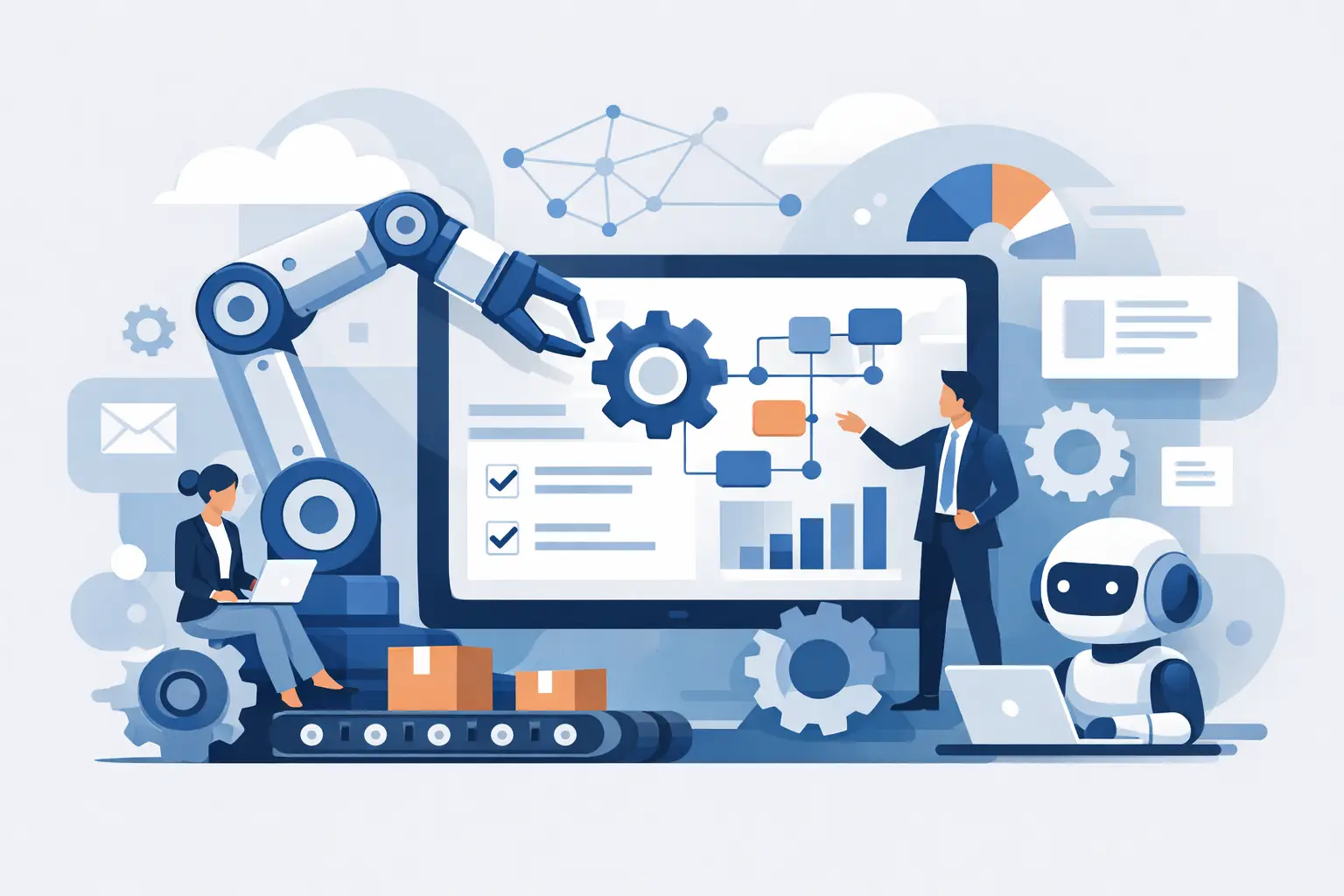
    Digital Business Automation Guide

    Most people do not need more hustle. They need fewer repetitive tasks.

    That is where a digital business automation guide becomes useful. If you are trying to build an online business around a job, kids, caregiving, or plain old mental fatigue, automation is not some fancy add-on. It is how you stop rebuilding the same day over and over again.

    The mistake a lot of beginners make is thinking automation means turning their business into a machine with no human touch. That is not the goal. Good automation handles the repeatable work so you can spend more time on the parts that actually grow the business – offers, relationships, content, follow-up, and decision-making.

    If you are new to this, keep it simple. You do not need ten software tools and a color-coded workflow map. You need to know what should be automated, what should stay personal, and what will save you the most time first.

    What digital business automation really means

    Digital business automation is the use of systems and software to handle tasks that happen again and again in your business. Think lead capture, email follow-up, appointment reminders, onboarding messages, payment confirmations, content scheduling, and basic customer support.

    The point is not to remove yourself from your business. The point is to remove unnecessary manual labor. If you are copying the same email, checking the same forms, or sending the same reminder every week, that is a system problem, not a motivation problem.

    For newer entrepreneurs, this matters even more. You probably do not have a big team. You may not have a team at all. That means every hour you waste on admin is an hour you are not using to make sales, improve your offer, or learn the skills that move the needle.

    Why automation matters more than motivation

    Motivation is unreliable. Systems are not.

    That may sound blunt, but it is true. You can be excited on Monday and overwhelmed by Thursday. Life happens. Work runs late. A kid gets sick. You lose steam. When your business depends only on your energy level, progress becomes inconsistent.

    Automation gives your business a baseline. Leads still get a response. Customers still get the next step. Interested people do not fall through the cracks just because you had a busy day.

    This is one reason people burn out so fast online. They are trying to manually hold together something that should have been systemized from the start. Then they assume they are the problem. Usually, they are not. Usually, the business has too much friction.

    The best place to start with a digital business automation guide

    Start with tasks that are both repetitive and easy to define.

    That means anything with a clear trigger and a clear next action. Someone fills out a form, and they get a welcome email. A customer buys, and they receive onboarding instructions. A booking is made, and a reminder goes out 24 hours before the call.

    The best early automation areas are usually lead generation, follow-up, onboarding, billing, and scheduling. These are the places where small delays cost you trust and momentum. They are also the easiest to clean up without changing your whole business model.

    Do not begin by automating everything. That is where people create a mess. If your process is confusing when done manually, it will be confusing faster when automated.

    Build your process before you build the tech

    This is the part people skip.

    Before you choose tools, write out the customer journey in plain English. How does someone find you? What happens after they show interest? What do they receive after they buy? Where do they get stuck? What questions do they ask every time?

    If you cannot explain your process simply, do not automate it yet. Clean it up first.

    A basic flow might look like this: someone sees your content, joins your email list, gets a short welcome sequence, books a call or buys a starter offer, receives onboarding, and gets follow-up support. That is enough to build around.

    Once that path is clear, automation becomes useful instead of overwhelming.

    Tools matter, but not as much as people think

    A lot of beginners get stuck comparing platforms. Email software, funnel builders, CRM systems, schedulers, chat tools, payment processors. That research can eat weeks.

    Here is the truth. Most decent tools can do the basics. The bigger issue is whether you will actually use them consistently.

    Choose tools that are beginner-friendly, fit your budget, and work well together. If a platform is powerful but confusing, it may not be the right fit right now. There is no prize for building the most complex stack.

    Simple usually wins early. One tool for email and forms, one for scheduling, one for payments, and one place to track leads is enough for many businesses at the start.

    If you are learning through a structured platform with built-in systems, that can save you a lot of trial and error. Apex Digital Now, for example, speaks to people who do not want to spend months patching together random advice and disconnected tools.

    What to automate first

    If you want fast relief, automate the points where delays create lost opportunities.

    Your lead capture should be automatic. If someone raises their hand, they should not wait three days to hear from you. Your follow-up should also be automatic, at least at the first level. Most people do not buy the first time they see something. They need reminders, value, and clarity.

    Onboarding is another big one. If someone gives you money, the next step should be immediate and clear. Nothing kills confidence faster than paying and then hearing crickets.

    Scheduling is also worth automating early. Manual back-and-forth emails waste time and make you look disorganized. Let people see availability and book directly.

    Then look at recurring admin. Invoices, reminders, confirmations, and basic status updates are perfect candidates.

    What not to automate too early

    Not everything should become hands-off.

    Your core message, offer strategy, and relationship-building still need your brain. If you automate communication before you understand your audience, your business can start sounding cold or generic. That is a real risk, especially in markets where trust matters.

    Support is another area where it depends. Basic FAQs can be automated. Sensitive questions, objections, and personal concerns usually need a real person. If your customers are making an emotional or financially meaningful decision, too much automation can hurt more than help.

    Content can be scheduled, repurposed, and organized with systems. But if every post sounds like it came from a template, people notice. Automation should support your voice, not replace it.

    Common mistakes that waste time

    The first mistake is automating a broken process. If people are confused now, software will not fix that.

    The second is overbuilding. Beginners often create long email sequences, too many tags, complicated branching logic, and a dozen integrations before they have steady traffic. Keep the system proportional to the business.

    The third is forgetting to test. Every automation should be checked from the user side. Fill out the form. Buy the product. Read the emails. Click the buttons. You want to catch friction before your audience does.

    The fourth is assuming automation means set it and forget it. It does not. You still need to review open rates, reply rates, conversions, and drop-off points. Good systems get adjusted.

    A practical mindset for automation

    Think less about scale and more about stability.

    You do not need a business that looks impressive on a whiteboard. You need one that works on your real Tuesday afternoon when you are tired and distracted. That is the test.

    Ask yourself a few basic questions. What tasks do I repeat every week? Where do leads go quiet? What part of my customer journey depends too much on memory? What can be made easier without losing trust?

    Those answers will point you to your first useful systems.

    This is especially important if you are starting later in life, switching careers, or building around a full schedule. You are not behind because you want a simpler path. You are being smart. Complexity is not proof of legitimacy. Results are.

    The real win of business automation

    The real win is not just time savings.

    It is consistency. It is knowing people hear from you. It is creating a business that does not stall every time life gets busy. It is giving yourself enough structure to keep moving, even before you feel fully confident.

    That matters more than most people realize. Confidence often comes after action, not before it. A clean system makes action easier.

    If you have been telling yourself you need more discipline, take a harder look at your process. You may not need to work harder. You may need to stop doing by hand what should already be handled by a system.

    Start small. Fix one bottleneck. Build one clear flow. Let the business become easier to run before you ask it to become bigger.

    That is how momentum starts to feel real.

    Ready to take the first step? Join the free webinar at apexdigitalnow.com and discover how to launch your online business with clarity, confidence, and real support behind you.

    As with any business, results will vary and cannot be guaranteed.*

  • How to Validate Business Ideas Online

    How to Validate Business Ideas Online

    You do not need another idea. You need proof.

    That is the hard truth most aspiring entrepreneurs avoid. A notebook full of concepts can feel productive, but until real people show interest, click, reply, join a waitlist, or buy, you are still guessing. If you want to know how to validate business ideas online, the goal is not to get compliments. The goal is to get evidence.

    That matters even more if you are building around a full-time job, family responsibilities, or a tight budget. You do not have months to build something nobody wants. Validation helps you make smarter moves early, protect your time, and stop confusing excitement with demand.

    What validation actually means

    Validation is simple. It means testing whether a real group of people has a real problem, whether they care enough to look for a solution, and whether your offer is interesting enough to make them take action.

    That action can look different depending on the stage you are in. Early on, it might be someone signing up for a waitlist or replying to a message. Later, it might be a pre-sale, a booked call, or a first purchase. Views and likes can be helpful signals, but they are weak ones. People spend attention casually. They spend money carefully.

    A lot of beginners make the same mistake. They ask friends and family if their idea sounds good. Most people will say yes because they want to be supportive. Support is nice. It is not market validation.

    How to validate business ideas online without overbuilding

    The fastest way to validate an idea is to test the promise before you build the full product.

    That means you start with a clear problem, a clear audience, and a simple offer. For example, instead of saying, “I want to start an online wellness business,” you narrow it down to something a specific person can immediately understand, like helping women over 40 build a simple meal planning routine for busy workweeks.

    Specific wins online. Vague gets ignored.

    Once you have that clearer idea, create a basic test. This could be a simple landing page, a short social post series, a free workshop topic, a low-cost pre-sell offer, or a survey sent to people who fit your target audience. You are not trying to impress anyone with fancy branding. You are trying to measure response.

    A basic landing page is often enough. It should explain who the offer is for, the problem it solves, the result people want, and the next step. That next step might be joining a waitlist, requesting early access, or booking a call. If nobody takes that step, that tells you something. If people do, now you have traction.

    Start with the problem, not the product

    Most weak ideas fail because the creator falls in love with the format before confirming the need.

    People say they want to build a course, start a membership, launch a coaching offer, or sell digital downloads. But those are delivery methods, not business ideas. The real question is this: what painful, expensive, frustrating, or time-consuming problem are you helping someone solve?

    Online buyers usually move for one of four reasons. They want to make money, save time, reduce stress, or improve identity and lifestyle. If your idea does not clearly connect to one of those drivers, validation will be harder.

    This is where market research matters. Spend time reading comments, reviews, forums, social media posts, and Q and A threads in your niche. Pay attention to repeated phrases. What are people struggling with? What have they already tried? What do they complain costs too much time, money, or energy?

    When you hear the same problem over and over, that is a better signal than your personal hunch.

    The signs that an idea has potential

    Not every positive response means you found a winner. You need stronger signals.

    A promising idea usually gets specific reactions. People ask follow-up questions. They want to know when it is available, how it works, what it costs, or whether it can help in their exact situation. They give you details about their struggle without being prompted. They opt in quickly. Sometimes they even ask to buy before you are fully ready.

    Weak ideas get passive reactions. People say, “That sounds cool” or “I would totally do that someday.” That kind of feedback feels encouraging, but it rarely leads to revenue.

    The strongest validation signal is commitment. An email signup is stronger than a like. A booked call is stronger than a signup. A pre-order is stronger than a booked call. The more effort or risk someone is willing to take, the more seriously you should take the signal.

    A practical way to test your idea in stages

    If you are trying to avoid expensive mistakes, test in layers.

    Start with messaging. Write a clear one-sentence offer and share it where your audience already spends time. If people do not understand it, your problem or promise is too fuzzy.

    Then test interest. Build a simple page and drive people to it through content, outreach, or a small paid traffic test. Watch whether they click and sign up.

    Next, test intent. Offer a beta version, a pilot program, a paid consult, or early access at a reduced rate. This is where many ideas get exposed. Plenty of people enjoy free content. Far fewer will pay.

    Then test delivery. If people buy, can you actually help them get the result you promised in a way that is realistic for you to run? An idea is not validated just because one person bought. It also needs to make sense as a repeatable business.

    That last part gets ignored too often. Some offers are easy to sell and hard to fulfill. Others attract interest but require too much customization to scale. Validation is not just about demand. It is also about viability.

    What numbers should you pay attention to?

    Do not drown yourself in analytics. In the beginning, a few numbers matter more than the rest.

    Watch click-through rate if you are testing interest through content or ads. Watch opt-in rate on your landing page. Watch response rate if you are doing direct outreach. Most importantly, watch conversion to a meaningful next step, whether that is a booked call, pre-sale, or purchase.

    The exact benchmark depends on the niche, price point, and traffic source, so there is no magic number that fits every test. But patterns matter. If 200 targeted people see your offer and almost nobody clicks, your message is off or the pain point is weak. If they click but do not sign up, your page is not convincing enough. If they sign up but do not buy, your offer may not feel urgent, valuable, or trustworthy.

    That is useful information. It means you can adjust the right part instead of scrapping the entire idea too soon.

    Common mistakes when validating online

    The biggest mistake is building first and testing later. A polished website, brand colors, and a stack of content do not make an idea valid. They just make it look finished.

    The second mistake is asking broad questions like, “Would you buy this?” Most people answer hypothetically. Better questions are grounded in behavior. Ask what they have already tried, what it cost them, what frustrated them, and what result they still want.

    The third mistake is testing with the wrong audience. Praise from people outside your market can send you in the wrong direction. You need feedback from people who actually have the problem and are likely to pay to solve it.

    The fourth mistake is quitting after one flat result. Sometimes the idea is wrong. Sometimes the audience is wrong. Sometimes the message is just too generic. Validation takes adjustment. One weak test does not always mean the opportunity is dead.

    Why this matters for beginners and career-changers

    If you are new to online business, validation is more than a smart tactic. It is protection against wasted momentum.

    A lot of people in mid-career do not fail because they lack work ethic. They fail because they try to figure out everything alone, overcomplicate the process, and sink time into things that feel productive but do not move the business forward. Validation keeps you focused on what the market actually wants.

    It also builds confidence. There is a big difference between hoping your idea might work and seeing real people respond to it. Once you get those signals, the next steps become clearer. You are not forcing a business into existence. You are responding to demand.

    That is one reason structured training and mentorship can matter so much. A platform like Apex Digital Now can help shorten the learning curve because you are not left guessing what to test, what signals matter, or what to do when the market gives mixed feedback.

    Validate fast, then decide

    You do not need perfect certainty before you begin. You need enough evidence to make a smart next move.

    So keep it simple. Define the problem. Name the audience. Test the message. Put a real offer in front of real people. Watch what they do, not just what they say. If the response is weak, refine it. If the response is strong, lean in.

    A business idea does not become real when you think about it long enough. It becomes real when the market answers back.

    Ready to take the first step? Join the free webinar at apexdigitalnow.com and discover how to launch your online business with clarity, confidence, and real support behind you.

    As with any business, results will vary and cannot be guaranteed.*

  • Online Digital Business for Non-Tech People

    Online Digital Business for Non-Tech People

    A lot of smart, capable people talk themselves out of starting because they think online business belongs to coders, marketers, or people half their age. That belief stops more progress than lack of money, time, or talent. The truth is simpler than most people realize: an online digital business for non-tech people is not only possible, it is often a better fit than the complicated version you see pushed all over the internet.

    If you can follow instructions, learn a few basic tools, and stay consistent, you can build something real. You do not need to design software, write code, or become a social media expert overnight. You need a clear model, a practical offer, and a system that keeps you moving when life gets busy.

    Why online business feels harder than it really is

    Most beginners are not failing because they are incapable. They are overwhelmed because the internet makes everything sound more technical than it needs to be. You hear terms like funnels, automation, CRM, lead magnets, domains, email sequences, and suddenly it feels like you need a second career just to understand the vocabulary.

    That confusion creates hesitation. Hesitation creates overthinking. Overthinking turns into months of watching videos, saving posts, and telling yourself you will start when you feel ready.

    Here is the part nobody says clearly enough: readiness is usually created by action, not by more research. The people who move forward are rarely the ones who know everything first. They are the ones who pick one path, learn the basics, and build momentum.

    What an online digital business for non-tech people actually looks like

    For most beginners, the best kind of online business is not the flashiest one. It is the one that solves a problem, uses simple tools, and can run without demanding constant technical work.

    That might mean selling digital education, promoting a proven business system, offering a service based on skills you already have, or building a content-based business that leads people toward a product or opportunity. The common thread is not complexity. It is structure.

    A practical online digital business for non-tech people usually has four moving parts. There is an offer, a way for people to find it, a simple process for follow-up, and support to help you improve as you go. Strip away the noise, and that is what most successful online businesses are built on.

    The mistake is assuming you need to build all of that from scratch. In many cases, using a guided framework is the smarter move. It cuts down on wasted time and lowers the odds of getting buried in setup problems.

    You do not need tech skills. You need business basics.

    This is where many people get stuck. They focus on the wrong gap.

    They think, I am not technical enough. But the bigger issue is usually that they have never been shown the basic mechanics of online business in plain English. Once those mechanics make sense, the tech becomes manageable.

    You need to understand how people discover an offer, why they trust it, and what makes them take the next step. You need to know how to communicate clearly, follow a process, and keep showing up. Those are business skills. They matter more than fancy tools.

    Tech still matters, but mostly at a functional level. Can you log into a platform, post content, send a message, follow a training, and use templates correctly? That is a very different question than asking whether you can build an app. Most people can absolutely learn the first set of skills.

    The best model is usually the one you will actually stick with

    A lot of advice online sounds good until it collides with real life. If you are working full time, raising kids, caring for family, or trying to recover from burnout, you do not need a business model that demands twelve moving parts every day.

    You need something realistic.

    That usually means choosing a model with clear training, repeatable actions, and tools that do not require constant troubleshooting. Simpler systems are not a shortcut. They are often what make consistency possible.

    There is a trade-off here. A simpler model may feel less custom in the beginning. It may not satisfy the urge to build everything your own way on day one. But for a beginner, customization is often a distraction. What matters first is getting proof that you can take action, generate traction, and understand how the pieces work together.

    What to focus on first

    If you are starting from zero, your first goal is not to become an expert. Your first goal is to reduce friction.

    Pick one business model. Pick one audience you can speak to. Pick one core offer. Then learn the handful of actions that matter most.

    For most people, that means learning how to create simple content, start conversations, build trust, and guide people toward a next step. It also means setting up basic tools once, not endlessly changing platforms because someone online said another tool is better.

    This is where mentorship matters. Left alone, beginners tend to complicate everything. They buy extra software, chase trends, and keep rebuilding before anything has time to work. Guidance helps you stay on the road instead of constantly stepping off it.

    The real obstacle is usually confidence, not capability

    Let’s be honest. A lot of people saying “I’m not techy” are really saying something deeper.

    They are saying they do not want to look foolish. They are worried they will click the wrong thing, waste money, or prove to themselves that they missed their chance. That fear is understandable, especially if you have spent years in a job that never taught you digital skills.

    But confidence does not appear before action. It shows up after repetition. You get confident by sending the first email, posting the first piece of content, joining the first training, and solving one problem at a time.

    No one starts polished. The people who win are usually the ones willing to be beginners for a while.

    Why support matters more for non-tech beginners

    Trying to build alone sounds independent, but for many people it just turns into expensive trial and error. When you are new, every small issue feels bigger than it is. One login problem, one confusing dashboard, one unclear lesson, and momentum disappears.

    That is why community and mentorship are not just nice extras. They are practical advantages. When you can ask questions, see how others are applying the system, and get feedback before you go too far in the wrong direction, you move faster with less frustration.

    This is especially true for people in the 35 to 65 range who are balancing real responsibilities. You do not have endless time to test random strategies. You need direction that respects your schedule and helps you make progress in the time you actually have.

    That is one reason platforms like Apex Digital Now connect with so many beginners. People are not just looking for information. They are looking for a path they can follow without feeling lost.

    How to know if a system is right for you

    Not every opportunity is a fit, and that is worth saying plainly. Some models are too vague. Some rely too heavily on hype. Some look simple until you realize they expect you to build half the business yourself.

    A strong beginner-friendly system should be clear about what you are building, what tools are included, what support exists, and what work you are still responsible for. It should help you move, not impress you with jargon.

    You should also look at your own personality. If you want total creative control from day one, a structured system may feel limiting. If you want momentum, support, and a shorter path from idea to action, structure is usually a major advantage.

    There is no perfect model for everyone. There is only the right next step for where you are now.

    Stop treating simplicity like a weakness

    Some people avoid beginner-friendly business models because they think simple means small. That is backward.

    Simple is what lets busy people execute. Simple is what makes follow-through possible. Simple is what gives you room to learn the business instead of drowning in setup.

    If you have been waiting because you are not technical, stop using that as the final verdict on what is possible for you. It is just a starting point. The right system can close skill gaps faster than you think, especially when it is built for normal people with real schedules, real responsibilities, and a real reason to change their life.

    You do not need to become someone else to start. You need to start as you are, with a model that makes sense and a process you can keep showing up for.

    **Ready to take the first step? Join the free webinar at [apexdigitalnow.com](https://www.apexdigitalnow.com) and discover how to launch your online business with clarity, confidence, and real support behind you.**

    — *\*As with any business, results will vary and cannot be guaranteed.*